
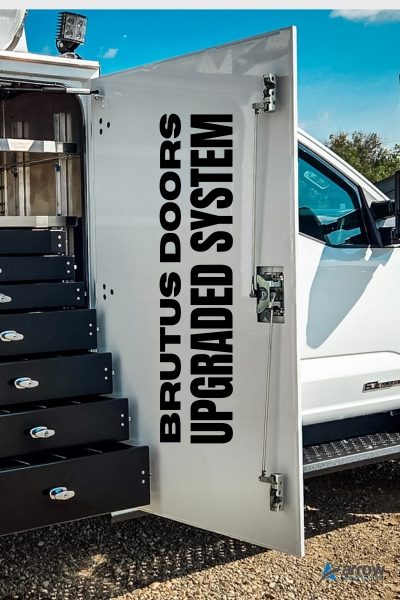
Service body compartment doors operate under conditions that reveal design weaknesses quickly. The updated Brutus door system addresses the functional issues that develop when doors experience thousands of opening cycles under field service conditions.
The new door design uses dual-panel construction rather than single-skin panels. This configuration increases panel stiffness and reduces flex during operation. When doors flex under normal use, latching mechanisms misalign and weather seals fail to maintain consistent contact. The dual-panel approach maintains dimensional stability across the door’s service life.
Increased structural rigidity creates a more solid feel during operation. The door responds predictably to closing force without the hollow flex typical of lighter construction. This solid response indicates proper engineering rather than cost-cutting in critical components.
The redesigned gas shock system removes the spring-loaded mechanisms that required manual release before door closure. Previous designs forced operators to manipulate a spring catch before the door could close properly. This extra step slowed compartment access when efficiency matters most.
The new system allows direct closure without manual preparation. You simply push the door closed and the mechanism handles the rest. This streamlines the workflow during service calls where repeatedly accessing compartments creates time delays that accumulate across the workday.
Top and bottom slam latches replace single-point latching systems. The dual-latch configuration distributes closure force across the door perimeter, maintaining even pressure on weather seals. Single latches create stress concentration at one point while leaving other seal areas loose.
The slam latches engage automatically when the door closes with sufficient force. No latch handle manipulation occurs before closing. The door latches positively when pushed shut, securing the compartment without additional steps. This automatic engagement matters when you are holding tools or parts during compartment access.
Solid mount tabs provide the structural attachment points for the latching hardware. The tabs distribute latch forces into the body structure rather than concentrating stress on thin panel material. This mounting approach prevents the latch loosening and door rattle that develops when hardware pulls through insufficient mounting substrate.
Door reliability directly affects service truck efficiency. When compartments open and close reliably without fighting latches or dealing with preparation steps, technicians spend more time on billable work and less time managing their equipment.
The elimination of door rattle maintains a professional appearance and indicates proper function. Doors that rattle or require adjustment communicate poor maintenance or inferior construction to customers. Solid door operation suggests well-maintained, quality equipment throughout the truck.
Looking to compare service body options? Review our complete aluminium service body lineup to evaluate different configurations and features. For complete truck packages with bodies already installed, explore our work-ready service trucks available for immediate delivery.