
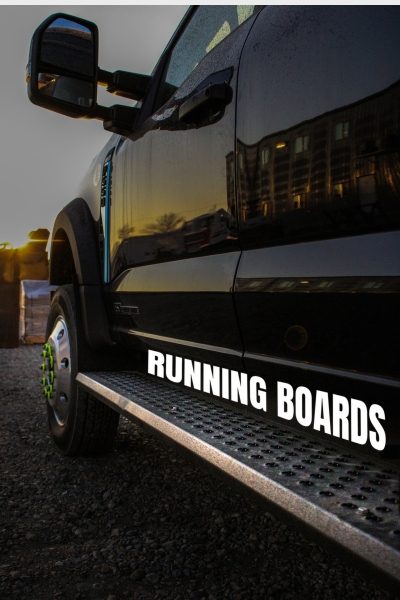
Service body installation requires removing factory running boards because the body structure occupies the mounting locations used by standard equipment. Frame-mounted aluminium running boards provide the replacement step access necessary for service truck operations while accommodating the dimensional constraints created by body installation.
Ram 5500 and Ford F-550 chassis configurations present specific mounting challenges when service bodies replace factory boxes. The body structure extends lower than factory boxes, eliminating the mounting points and clearances used by standard running board systems. Frame-mounted designs attach directly to chassis frame rails, bypassing the body structure entirely.
This mounting approach maintains step access regardless of body configuration. The running boards remain functional across different service body lengths and styles because the attachment points connect to chassis structure rather than body-specific mounting locations.
Powder-coated aluminium construction resists corrosion from road salt, chemical exposure, and moisture accumulation common in service truck operations. Steel running boards develop rust that compromises both structural integrity and appearance. The corrosion resistance matters particularly for trucks operating in regions where winter road treatment creates persistent salt exposure.
The material choice maintains strength while reducing weight compared to steel alternatives. Every pound added to the truck reduces available payload capacity. Running boards represent permanent weight that doesn’t contribute to revenue-generating capability, making lightweight construction preferable when it maintains adequate strength.
Aggressive grip points machined into the step surface provide traction during entry and exit. The grip pattern works through contamination layers that accumulate on smooth surfaces, maintaining foot purchase when mud, snow, or ice coverage would otherwise create slip hazards.
The traction coating adds a secondary grip mechanism beyond the mechanical grip points. This dual-approach system maintains effectiveness across varied weather conditions and contamination types. Mechanical grip handles mud and debris, while the coating provides additional purchase on ice and wet surfaces.
The bevelled edge profile eliminates the sharp corner typical of flat-edged running boards. Sharp edges catch clothing, tool belts, and equipment during routine access. The snag-free edge design reduces these interactions that slow operations and damage equipment.
The bevelled profile also presents a finished appearance rather than the utilitarian look of flat-cut edges. This attention to finishing details creates a cohesive appearance between the running boards and the service body installation.
Technicians access service truck compartments dozens of times daily during field operations. Each access cycle requires climbing into or out of the truck cab and stepping to compartment height for tool and parts retrieval. Reliable step access affects both safety and work efficiency.
Secure footing prevents the slips and falls that occur when step surfaces become slippery or unstable. The injuries from falls create both direct costs from medical treatment and indirect costs from lost work time. Prevention through proper step design represents practical risk management.
The running boards also reduce the physical stress from repeatedly climbing into elevated cab positions. Lower physical strain over a workday reduces fatigue and maintains work quality during extended service calls.
The frame mounting positions the running boards to work with service body compartment arrangements. The boards provide step access to both cab entry and compartment access points, supporting the workflow patterns typical of service operations.
The mounting system accommodates the various accessories and equipment attached to service bodies without interference. Hydraulic lines, wiring, and mounting brackets for cranes or compressors all occupy space near the frame rails where running boards mount. Proper design accounts for these clearances during installation.
Ready to see complete service truck configurations? Review our in-stock service trucks showing running boards integrated with complete body installations. For comparing different service body options, explore our aluminium service bodies to see how different configurations affect overall truck layout.