
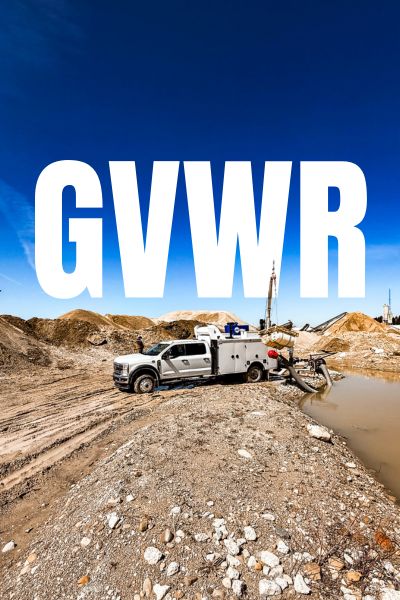
When shopping for a work truck, you’ll often see the term GVWR listed in the specifications. While it may seem like just another number on a spec sheet, it plays a major role in how your truck performs, how much it can safely carry, and how long it will hold up in the field.
GVWR (Gross Vehicle Weight Rating) is the maximum allowable weight of a fully loaded vehicle, as determined by the manufacturer.
This includes:
Exceeding the GVWR can lead to premature wear on suspension and braking components, reduced handling, increased stopping distances, and potential legal or insurance issues.
A truck may look capable of handling a heavy load, but appearances can be misleading. Once a service body, crane, air compressor, welder, fuel, and tools are added, the available payload can disappear quickly.
Choosing the right GVWR from the start helps ensure your truck can safely handle the equipment and materials it will carry every day—not just when it’s empty.
At Arrow Equipment, every service truck chassis is specified with a 19,500 lb GVWR.
Why?
Because our customers rely on their trucks to work hard every day. A higher GVWR provides additional capacity for the equipment that makes a service truck productive, including:
Rather than building a truck that’s already close to its weight limit before it even leaves the shop, we start with a chassis that gives customers more usable payload and greater flexibility.
A properly spec’d chassis isn’t just about carrying more weight—it’s about building a truck that performs as intended.
Operating within the vehicle’s rated capacity helps:
Every work truck is an investment, and the chassis is its foundation.
That’s why Arrow Equipment carefully specs each build to support the demands of real-world service work. Starting with a 19,500 lb GVWR chassis means your truck is better prepared for the equipment you need today—and the additions you may need tomorrow.
When you’re investing in a service truck, it’s worth looking beyond the body and accessories. The right chassis rating can make all the difference once the truck is loaded and put to work.